The Semiotics of TikTok Emoji Codes: How Visual Symbols Carry Meaning in Digital Communication
Semiotics, the study of how signs and symbols create meaning, has been a core discipline in the humanities since Ferdinand de Saussure and Charles Sanders Peirce laid its foundations in the early 20th century. It examines the relationship between a **signifier** (the form a sign takes) and the **signified** (the concept it represents). TikTok's emoji system provides a remarkably clean case study in how these relationships work in digital communication.
This page applies semiotic analysis to TikTok emoji codes. The argument is short: the codes do most of their work not by what the graphic depicts, but by what the comment section around them has agreed they signal.
The Three Layers of TikTok Emoji Meaning
In semiotic terms, TikTok emoji codes operate on three distinct levels of meaning:
Level 1: The Literal (Denotative) Meaning
At its most basic level, each emoji represents a visible emotional expression. The `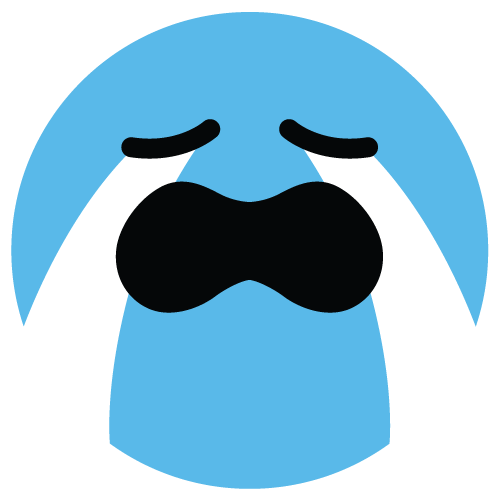
[cry]` emoji depicts a face with a single tear. The `
[shock]` emoji depicts a face with wide eyes and an open mouth. This is the **denotative** meaning — what the image literally shows.
On most platforms, this is where emoji meaning stops. A crying face emoji means sadness. A laughing face means happiness. The symbol maps directly to the emotion.
Level 2: The Contextual (Connotative) Meaning
On TikTok, emoji meaning is shaped by context. The same `[cry]` emoji can mean sadness, but it more commonly means "I'm laughing so hard I'm crying" in comedy comment sections. In emotional content, it means "this touched me deeply." In wholesome content, it means "this made me emotional."
This is the **connotative** meaning — what the sign communicates beyond its literal content. The connotation depends entirely on the comment section in which the emoji appears. The same visual symbol carries different meanings in different contexts.
This contextual meaning-shifting is a well-documented semiotic phenomenon. The same word (or symbol) can mean different things in different cultural settings. What makes TikTok unique is the speed and visibility of this process. Semantic shifts that historically took generations happen in months on TikTok.
Level 3: The Social (Performative) Meaning
Beyond literal and contextual meaning, TikTok emoji codes carry a **performative** dimension — they do something beyond what they say. When a user types `[cry]` in a comedy comment, they are not just expressing amusement. They are performing community membership. They are saying "I am part of this community, I understand how we react here."
This performative function is what separates TikTok emoji codes from Unicode emojis. A standard Unicode crying face (😢) expresses sadness. A TikTok `[cry]` code expresses sadness **and** signals platform fluency **and** demonstrates cultural awareness. The bracket code carries social information that the Unicode emoji does not.
Signifier and Signified in the Bracket System
The bracket notation itself — typing `[cry]` to produce a crying face — creates an interesting semiotic relationship. The text code `[cry]` is one signifier. The resulting emoji graphic is a second signifier. Both point to the same signified concept (crying/sadness/being moved), but they carry different cultural weight.
The text code is **private** — the user types it, knows what they're doing, and understands the code's cultural significance. The graphic is **public** — everyone sees it, regardless of whether they know the code.
This creates a **dual audience** for TikTok emoji usage: - Insiders who see both the code and the graphic and understand the full cultural meaning - Outsiders who see only the graphic and miss the cultural layer
This dual audience is a defining feature of TikTok's emoji system and is what makes it such a rich semiotic object.
The Peircean Triad Applied to TikTok Emojis
Charles Sanders Peirce's model of signs distinguishes between three types:
**Icons** — Signs that resemble what they represent. A photo of a face is an icon of that face. TikTok emoji graphics are icons — they visually depict emotional expressions.
**Indexes** — Signs that have a causal connection to what they represent. Smoke is an index of fire. A comment full of `
[lmao]` emojis is an index of genuinely funny content — the laughter causes the emoji usage.
**Symbols** — Signs that represent their meaning through convention or agreement. The word "dog" is a symbol — there's nothing inherently dog-like about the letters D-O-G. TikTok emoji codes are symbols — `[cry]` means crying because the community has agreed it does, not because the letters C-R-Y look like tears.
TikTok emoji codes are unique because they combine all three types into a single system. The user types a symbol (`[cry]`), which produces an icon (the crying face graphic), which functions as an index (signaling that the content provoked a genuine emotional reaction). This triple-layered semiotic structure is unusual in digital communication and is one reason the system feels so expressive.
Why Semiotic Analysis Matters
Understanding TikTok emoji codes semiotically is not just an academic exercise. It has practical implications for:
**Content creators** — Understanding the multiple layers of emoji meaning helps creators anticipate how their audience will read and respond to their content. If an emoji carries social and performative meaning beyond its literal one, then using (or not using) certain emojis sends signals about the creator's community fluency.
**Brands and marketers** — Brands that use TikTok emoji codes incorrectly are usually making a semiotic error. They see only the denotative meaning (this emoji means X) and miss the connotative and performative layers. The result is communication that feels hollow or inauthentic because it's operating at only one level of meaning.
**Researchers and educators** — TikTok emoji codes provide a rare window into how digital communities create shared meaning systems. Studying them semiotically can reveal patterns that apply to other forms of digital communication, from memes to platform-specific slang.
For a deeper look at how TikTok emoji codes function as language, see our linguistic analysis. For the anthropological perspective on emoji as cultural markers, see digital anthropology and emoji culture.
Related Articles(5)
Why TikTok Commenters Default to [cry] Instead of Words
Most TikTok comments are a single emoji. Here is what is actually going on when a commenter chooses [cry] over 'that was funny,' and why the shorthand beats the sentence in a fast-moving comment section.
Read more →How TikTok Emoji Codes Function as Group Membership
Bracket codes like [cry], [wronged], and [clown] are not just visual shortcuts — they are how TikTok commenters signal they belong. Here is the social mechanics of how it actually works in comment sections.
Read more →TikTok Emoji Codes as Digital Language: A Linguistic Analysis
TikTok's bracket emoji codes aren't just shortcuts — they form a genuine linguistic system with grammar, semantics, and community-driven evolution. Here's what linguists and language researchers can learn from them.
Read more →Why Does Only TikTok Have Custom Emoji Codes? What Other Platforms Do Differently
TikTok is the only major platform where typing [cry] in a comment produces a custom graphic. Why did TikTok build this system when YouTube, Instagram, and X went with standard emojis?
Read more →TikTok Emoji Meanings Across Languages: How [cry], [cool], and [wronged] Translate Across Cultures
The same TikTok emoji carries different meanings in English, Spanish, Chinese, Portuguese, and Indonesian contexts. Here's a side-by-side comparison.
Read more →Explore More on Emoji Tik
Browse our complete emoji library with all 46 verified TikTok emoji codes and meanings.
Read our latest research articles, trend reports, and emoji guides.
Get answers to common questions about TikTok emojis and their usage.
Have questions or suggestions? We're here to help.