How TikTok Emoji Codes Function as Group Membership
Most of the existing writing on TikTok emoji codes treats them as a reference problem — "which code makes which picture." The more interesting question is social: why do people bother to learn the codes at all, when Unicode emojis are already on their phone?
The short answer is that bracket codes do a piece of social work that Unicode emojis cannot. They mark who is in and who is out, they let commenters coordinate reactions fast, and they let subcommunities (beauty, gaming, story-time, comedy) develop their own dialects inside the bigger platform. The rest of this page is the longer version, with the specific patterns we have seen in comment sections and in our quarterly reader poll.
The insider/outsider line
Every online community finds ways to tell members from non-members. On TikTok, the line is partly the codes.
A new TikTok commenter who has not picked up the bracket codes yet usually writes in pure Unicode — the standard faces on the phone keyboard. Regular users notice. A comment full of 😭 and ❤️ reads differently from one that uses `
[cry]`, `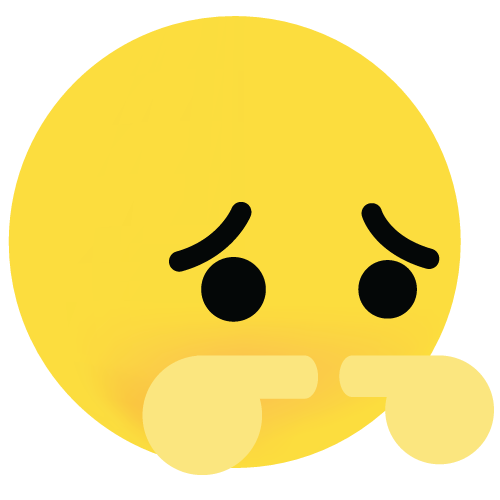
[wronged]`, and `
[clown]`. It is not that the Unicode version is wrong. It just reads as not-from-here.
Knowing the codes is a kind of community knowledge that has social value. Anthropologists have a name for this — cultural capital — and it applies here cleanly: dropping the right emoji in the right comment is a way of saying "I understand how this place works." That statement lands even if the comment itself is short. The codes carry the social claim.
The call-and-response shape
Story-time video drops a twist → comment section fills with `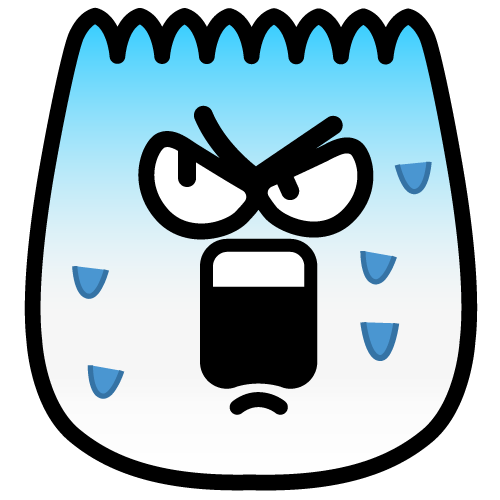
[shock]` and `
[stun]`. Glow-up video goes up → comments respond with `[wronged] + 
[pride]`. A meme actually lands → `[cry] + 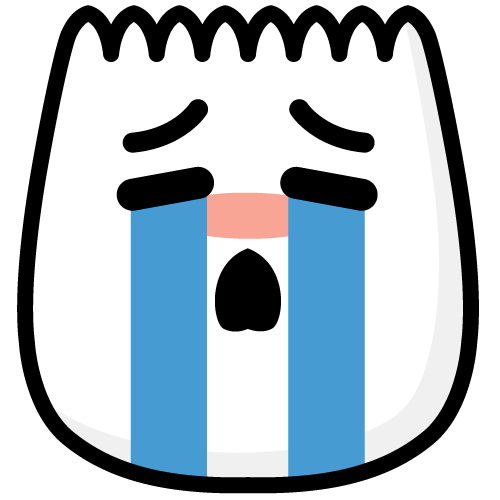
[tears] + 
[lmao]` appears across hundreds of comments within minutes.
This is not random. It is coordinated reaction at platform scale. Each `[cry]` is both a personal response ("I found this funny") and a community one ("I know how we react to funny things here"). Both messages ride the same bracket.
The repetition is the point. When 800 commenters use the same emoji stack within an hour of a video posting, the stack stops being a personal choice and starts being a ritual. The community is, for a moment, agreeing on what just happened.
Subcommunity dialects
Different corners of TikTok develop different default codes. The pattern is consistent enough that you can usually predict which corner a comment came from by the codes alone:
- **Beauty and fashion TikTok** defaults to `
[cute]`, `
[hearteyes]`, and `
[loveface]`. Warm, appreciative, aesthetic.
- **Gaming TikTok** leans on `[shock]`, `
[cool]`, and `[lmao]`. Surprise at gameplay, approval of skill, shared jokes.
- **Story-time and drama TikTok** runs on `[wronged]`, `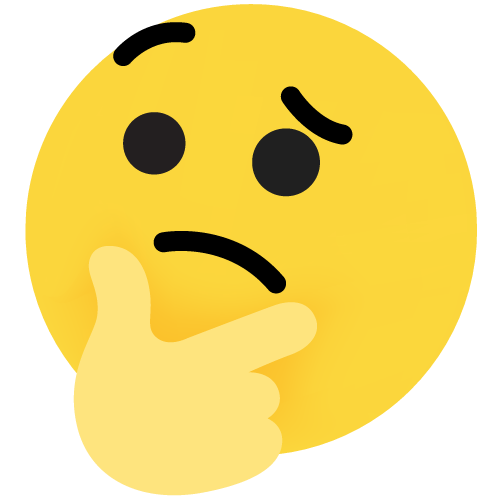
[thinking]`, `
[facepalm]`, and `
[evil]`. Moral judgment, skepticism, disbelief.
- **Comedy TikTok** is dominated by `[cry]`, `[lmao]`, and `
[laughwithtears]`. The laughter trio, used everywhere.
A user who drops `[evil]` into a beauty video, or `[hearteyes]` into a gaming clip, reads as someone who knows the codes but not the local dialect. Both signals matter.
Stacks do more work than singles
Single brackets get the job done. Stacks do something extra.
A stack like `[wronged] + [pride]` is recognizable as a comeback shape. Commenters who recognize it are signaling fluency in the shared grammar; commenters who do not recognize it are not part of the conversation the stack is having. The stack functions like a shibboleth — a small test of community membership built into the comment itself.
Stacks also let commenters carry tone that is otherwise hard to put in a short comment. The sequence `[cry] + [pride]` reads as "I find this hilarious AND I am winning at it" — emotional complexity that would otherwise need a paragraph. Most TikTok comments are not paragraphs, so the stack is doing real work.
What this means for people outside the platform
Two practical notes for people writing about or adjacent to TikTok:
1. **Copying the codes is not enough.** A brand or observer who drops `[cry]` in a comment still reads as outside the community if they use it in the wrong context. The codes are easy. The cultural context around them is the harder thing to get right.
2. **Bracket codes are a community instrument, not a feature of the platform.** TikTok did not invent the codes to build community; the community built the codes, and the codes built the community back. Treating them as a marketing surface tends to flatten what they actually are.
For the linguistic side, see the [linguistic analysis](/blog/tiktok-emoji-linguistics-analysis). For how the codes mean different things across regions, see [cross-cultural emoji meanings](/blog/cross-cultural-tiktok-emoji-meanings).
A second axis: what each emoji *does*, not what it *shows*
The category-hub view groups emojis by mood (Happy, Sad, Funny, and so on). That view tells you what an emoji depicts. The newer [cultural layers hub](/cultural-layers) reads the same 46 codes along a second axis — what social work each emoji actually performs in launch-day comment sections, skepticism threads, and nostalgia defenses. Three layers: Status (claim a buy), Skeptic (question the price), Nostalgia (defend what you already own). Several codes, including `[cry]`, `
[smile]`, and `
[proud]`, sit in two layers at once and do different work depending on which layer the commenter is operating in. For a worked example of all three layers in a single launch, see the [iPhone 18 launch field guide](/blog/tiktok-emoji-iphone-18-launch-comment-field-guide).
The broader ecosystem: beyond the bracket codes
The bracket-code reading layer is one slice of 2026 emoji culture. The site's [Pop Culture & Emoji ecosystem](/pop-culture) covers the parallel slices: Unicode emojis that drove 2026 comment sections (🩷 pink heart, 🫶 heart hands, 💀 skull-as-internet-native), cross-platform triggers (Discord `:KEKW:`, Twitter `Pog`, iMessage Animoji, Instagram Emoji Slider), and meme stacks like `
[doge] + [clown] + 
[skull]` that travel together. The deeper [cultural-layers view there](/pop-culture/eras) extends Status / Skeptic / Nostalgia with four new layers — Internet Native (the meme that took over from its literal meaning), Generational (🩷 pink heart as a cohort-sort), Aesthetic (✨ sparkles as a movement flag), and Subculture (🫶 heart hands carrying K-pop fan-sign origin). For a worked cross-platform walkthrough see the [cross-platform emoji guide](/blog/cross-platform-emoji-meanings-2026).
Related Articles(5)
Why TikTok Commenters Default to [cry] Instead of Words
Most TikTok comments are a single emoji. Here is what is actually going on when a commenter chooses [cry] over 'that was funny,' and why the shorthand beats the sentence in a fast-moving comment section.
Read more →TikTok Emoji Codes as Digital Language: A Linguistic Analysis
TikTok's bracket emoji codes aren't just shortcuts — they form a genuine linguistic system with grammar, semantics, and community-driven evolution. Here's what linguists and language researchers can learn from them.
Read more →Why Does Only TikTok Have Custom Emoji Codes? What Other Platforms Do Differently
TikTok is the only major platform where typing [cry] in a comment produces a custom graphic. Why did TikTok build this system when YouTube, Instagram, and X went with standard emojis?
Read more →TikTok Emoji Meanings Across Languages: How [cry], [cool], and [wronged] Translate Across Cultures
The same TikTok emoji carries different meanings in English, Spanish, Chinese, Portuguese, and Indonesian contexts. Here's a side-by-side comparison.
Read more →5 TikTok Emoji Mistakes Every Beginner Makes (And How to Fix Them)
Using the wrong TikTok emoji code, stacking too many emojis, or ignoring context—these common mistakes make your comments look spammy. Here's how top commenters do it right.
Read more →Explore More on Emoji Tik
Browse our complete emoji library with all 46 verified TikTok emoji codes and meanings.
Read our latest research articles, trend reports, and emoji guides.
Get answers to common questions about TikTok emojis and their usage.
Have questions or suggestions? We're here to help.