
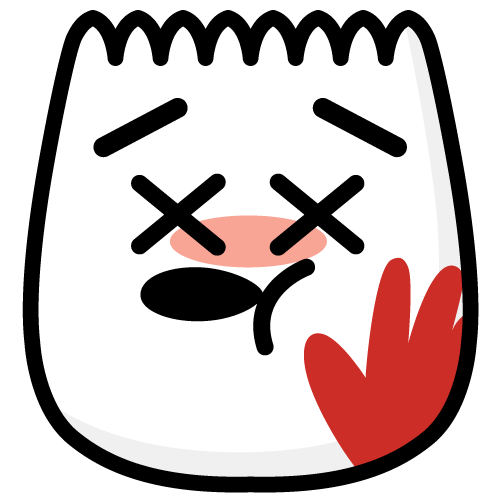

About TikTok Shout Emoji
The TikTok Shout emoji shows a character shouting loudly, used for announcements, anger, or when you need to be HEARD. It's the caps-lock of emojis.

Copy code [shout] to use in TikTok comments & DMs
[shout]A character shouting loudly. Used for announcements or anger.
The TikTok Shout emoji shows a character shouting loudly, used for announcements, anger, or when you need to be HEARD. It's the caps-lock of emojis.
Based on TikTok comment analysis data. Higher percentage means more frequent usage.
See how real TikTok users use the Shout emoji in comments:
LISTEN TO ME [shout]
THIS IS IMPORTANT [shout]
Stack emojis together for more expressive TikTok comments:
[shout]+
[angry]+
[rage]The Escalation Stack -- from emphasis to genuine frustration on callout content
[shout]+
[wow]+
[astonish]The Announcement Stack -- big-reveal closers for PSAs and news
Shouting has different connotations across cultures. On TikTok, [shout] is often used for emphasis rather than actual anger.
Same Unicode spec, four completely different visual designs. Each platform creates its own artwork based on the same codepoint (U+1F631):

The round, flat design used by twitter.com, Discord, Mastodon, and most of the social web.

Designer-led open-source emoji. More literal / illustrative than Twemoji.

Same OpenMoji design in monochrome — the print-friendly variant.
How this emoji renders on YOUR device — Apple, Google, Microsoft, or Samsung depending on your OS.
Where [shout] tends to land hardest in a real creator strategy:
Same emoji, different platform vibe. What [shout] signals depends on where you post it:
The emphasis default. Most-used emoji on PSAs, call-outs, and "listen to me" closers.
Frequent on Reels captions and announcement posts; less common on lifestyle and brand content.
Bridges to caps-lock text emphasis; works in hot-take and PSA threads.
Common on Shorts and political commentary; rare on long-form video comments where the read can feel shouty.
[shout]The [shout] code works on both iOS and Android TikTok apps. It can be used in comments, captions, and direct messages.
The TikTok Shout emoji shows a character shouting loudly, used for announcements, anger, or when you need to be HEARD. It's the caps-lock of emojis....
Type [shout] (including the brackets) in any TikTok comment, caption, or DM. The app will automatically convert it to the Shout emoji.
No, [shout] is exclusive to TikTok. Other platforms like Instagram, Twitter, and YouTube don't recognize TikTok's bracket emoji codes. On those platforms, use the closest Unicode emoji instead.
[shout] is TikTok "I need to be heard" emoji -- the equivalent of typing in caps. It signals emphasis, urgency, or a strong point, not necessarily anger.
[shout] is meant to emphasize, not to attack. Use it for announcements, PSAs, or genuinely important points. Avoid it on vulnerable posts or supportive threads where the caps-lock read lands as aggressive.
Searching for the shouting emoji on TikTok means you want the caps-lock-equivalent face used for PSAs and announcements, not a generic Unicode speaker-with-sound emoji which works on every platform but lacks the TikTok-native graphic. The bracket code for the loud-shouting face on TikTok is [shout] -- it renders as a character shouting loudly that reads as emphasis and urgency rather than pure anger. For pointed-but-controlled frustration use [angry], for nuclear-rant meltdown try [rage], and for I-AM-LITERALLY-SCREAMING horror energy use [scream]. Type [shout] in any TikTok comment, caption, bio, or DM and the app converts it to the hidden shouting graphic. Note that the bracket code only converts inside the TikTok app -- it will not turn into an emoji in plain text messages or other apps.