The [thinking] Emoji: TikTok's Most Intellectual Reaction and How to Use It Right
The 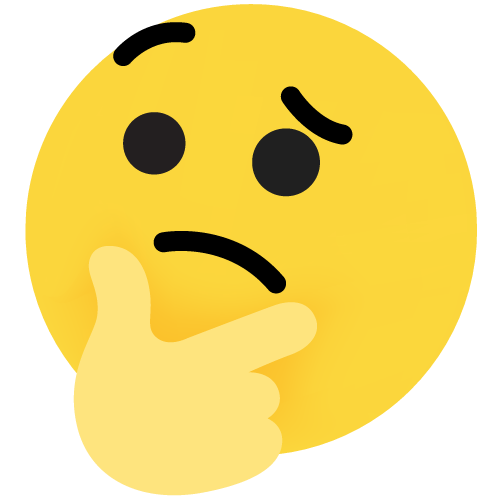
[thinking] emoji—a face with hand on chin, eyes slightly narrowed—appears on TikTok more often than most users realize. It's not the most flamboyant emoji on the platform. It doesn't generate the explosive reactions of 
[cry] or the swagger of 
[pride]. But for content that invites analysis, reconsideration, or gentle pushback, [thinking] is the most effective tool in the TikTok emoji toolkit.
Understanding [thinking] matters because it's the emoji that most consistently starts conversations rather than just registering reactions. Most TikTok emojis close discussions—a well-placed [cry] says "I felt that" and that's the end of it. [thinking] opens a door. It says "I have questions" or "let me process this out loud." And that invitation to continue the conversation is what turns a single-comment engagement into a thread.
What [thinking] Actually Means on TikTok
On TikTok, [thinking] is rarely used for actual contemplation. TikTok is a fast-scrolling platform where users rarely stop to genuinely think about a piece of content. Instead, [thinking] has evolved into a specific form of polite skepticism—the emoji equivalent of "hmm, let me consider that."
The key word is *polite*. [thinking] is never confrontational. It doesn't say "you're wrong" or "this is bad." It says "I have questions" or "something about this doesn't add up for me." This makes it uniquely useful on advice content, story time, drama discussions, and any content where the viewer wants to engage without being aggressive.
**The four primary meanings of [thinking] on TikTok**:
**1. "But like... why tho?"** — Questioning the premise. The most common use of [thinking] appears on advice or tips content where the viewer isn't convinced by the argument. The emoji signals "this doesn't sit right with me" without attacking the creator directly.
**2. "Hmm, let me think about this"** — Polite skepticism that's willing to be persuaded. This use of [thinking] acknowledges the content has merit but isn't fully converting the viewer. It's the emoji of "I see your point but I'm not there yet."
**3. "Something about this doesn't add up"** — Sensing inconsistencies. On story time content, [thinking] appears when the viewer spots something that doesn't quite track. It can signal "I think you're leaving something out" without explicitly calling someone a liar.
**4. "I wonder if..."** — Genuine curiosity. The rarest use of [thinking] is when a viewer is actually intrigued and wants to explore the content's implications further. This usage most commonly appears on educational content, "what if" scenarios, and speculative content.
Where [thinking] Works Best
Story Time Content
On story time videos, [thinking] is most effective when the story seems slightly too perfect, too convenient, or too dramatic to be entirely true. The emoji signals "I'm not fully buying this" without being accusatory. Adding 
[facepalm] after [thinking] creates the "I'm not buying this and I see the same thing happening" stack—a common pattern on story time content where viewers recognize the creator's behavior patterns.
The combination `[thinking][facepalm]
[awkward]` is particularly effective on story time. It tells a complete narrative: "I processed this, I see the embarrassing pattern, and I'm now feeling the secondhand embarrassment."
Advice and Tips Content
Advice content on TikTok generates more [thinking] than almost any other category. When a creator shares tips, life hacks, or recommendations, viewers who aren't fully convinced deploy [thinking] as a polite counter-point. The emoji says "I hear you, but I'm not sure this applies to my situation" or "I'm skeptical that this actually works."
On advice content, [thinking] followed by a text question often outperforms emoji-only comments. The emoji establishes the viewer's intellectual position, and the text asks the clarifying question that invites genuine engagement.
Drama and Conflict Content
When TikTok serves up drama content—conflicting stories, "he said/she said" situations, relationship conflicts—[thinking] appears frequently in the comment section because drama almost always has inconsistencies to analyze. Viewers use [thinking] to signal "I'm still processing the information and haven't made a final judgment."
On drama content, [thinking] is often paired with 
[wronged] or [pride] depending on which side the viewer leans toward. The stack `[thinking][wronged]` says "I'm analyzing this and I identify with the person who was wronged." The stack `[thinking][pride]` says "I'm analyzing this and I respect the person's position."
The [thinking] Combinations That Work
[thinking] + [facepalm] + [awkward] — The Realization Arc
This three-emoji sequence is one of TikTok's most expressive stacks. It tells a complete story in three acts: processing leads to recognition of an embarrassing pattern, which leads to secondhand embarrassment.
**Why the order matters**: In `[thinking][facepalm][awkward]`, the viewer first processes, then physically reacts to the realization, then feels the emotional aftermath. Reversing the order—to `[facepalm][thinking][awkward]`—starts with the physical reaction and works backward to the processing. Both work, but they tell slightly different stories.
[thinking] + [wronged] — "I'm Processing and Feel Implicated"
On drama content where the viewer recognizes their own potential behavior in the situation, `[thinking][wronged]` is the standard stack. The viewer is thinking about the content AND identifying with the person who was wronged.
[thinking] + [pride] — "I've Analyzed This and I Respect It"
The analytical endorsement stack. Viewers use this when the content has made a point they respect even if they initially had questions. The combination says "I thought about it and the conclusion is actually solid."
[thinking] + 
[stun] — The Brain Processing Stack
For content that genuinely breaks the viewer's model of how something works, `[thinking][stun]` signals that the content has created cognitive dissonance. The viewer is processing what they saw AND their brain has temporarily shut down from the implications. This stack appears most often on "things you didn't know" content, revelations, and content that upends assumptions.
[thinking] + 
[disdain] — "I've Thought About This and I'm Not Impressed"
The analytical dismissal stack. For content where the viewer has fully considered the argument and rejected it, `[thinking][disdain]` delivers that verdict politely. It says "I gave this a fair hearing and my conclusion is that it's not for me."
[thinking] vs. Related Emojis
The emojis most commonly compared to [thinking] are [stun], [disdain], and 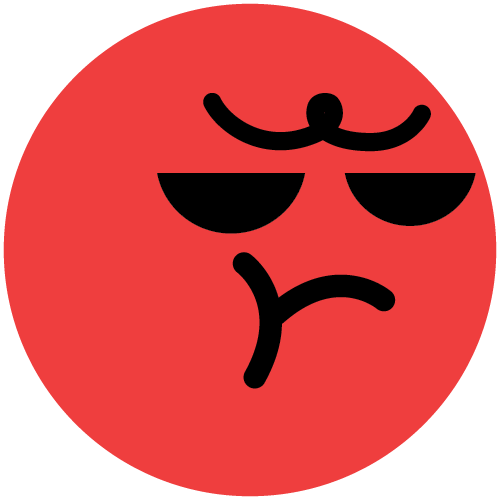
[sulk]. Understanding the distinctions helps you choose the right emoji.
**vs. [stun]**: [thinking] is active contemplation—the viewer is processing information. [stun] is cognitive shutdown—the information has broken the viewer's ability to process. [thinking] is "I have questions." [stun] is "my brain stopped working." Use [thinking] when the content invites analysis; use [stun] when the content has genuinely shocked or bewildered you.
**vs. [disdain]**: [thinking] is neutral questioning—it's open to persuasion. [disdain] is judgment—it's closed to persuasion. [thinking] says "I'm not sure." [disdain] says "I'm sure and I don't like it." Use [thinking] when you want to engage; use [disdain] when you've made your decision.
**vs. [sulk]**: [thinking] is outward-facing—it addresses the content. [sulk] is inward-facing—it expresses the viewer's own frustration. On story time content, [thinking] analyzes what happened while [sulk] expresses how the viewer would feel if it happened to them.
Pro Tip: [thinking] Gets Conversations Started
The most practically useful feature of [thinking] is its tendency to generate replies. Comments that register only emotional reactions—[cry] for sadness, 
[lmao] for amusement—tend to be endpoints. The viewer expressed their feeling and that's the end. Comments that open questions or invite dialogue get responses.
[thinking] on TikTok functions as an implicit question mark. It signals that the viewer has questions, observations, or alternative perspectives worth sharing. This makes [thinking]-tagged comments more likely to receive responses from both other viewers and the creator.
For creators, noticing [thinking] in comments is useful data. It often indicates content that's close to converting but not quite landing—the viewer is engaged enough to have questions but not yet fully persuaded. Responding to [thinking] comments with additional information or clarification can turn skeptically engaged viewers into believers.
For the linguistics behind thinking and skepticism in digital communication, see our [emoji linguistics analysis](/blog/tiktok-emoji-linguistics-analysis). For all verified codes, see the [emoji dictionary](/blog/tiktok-emoji-codes-dictionary).
Related Articles(5)
About Emoji Tik: Our Mission to Decode Digital Expression
Meet the team behind Emoji Tik and learn about our passion for understanding how emojis shape digital communication, culture, and human connection in the TikTok era.
Read more →TikTok Emoji Codes: Copy and Paste All 46 Emojis (Complete List & Meanings)
A complete TikTok emoji list guide that explains every hidden TikTok emoji code, how to read the TikTok emoji list with meanings, and how to copy & paste codes into comments like a native.
Read more →TikTok Emoji FAQ: 40+ Questions About TikTok's Hidden Emoji System (2026)
The most comprehensive FAQ about TikTok emoji codes — how they work, what they mean, why they don't show, and how to use them correctly.
Read more →5 TikTok Emoji Mistakes Every Beginner Makes (And How to Fix Them)
Using the wrong TikTok emoji code, stacking too many emojis, or ignoring context—these common mistakes make your comments look spammy. Here's how top commenters do it right.
Read more →Creator's Guide to TikTok Emoji Engagement: 7 Tactics That Get Comments
How content creators can use their understanding of TikTok emoji culture to write better captions, encourage more comments, and build stronger communities.
Read more →Explore More on Emoji Tik
Browse our complete emoji library with all 46 verified TikTok emoji codes and meanings.
Read our latest research articles, trend reports, and emoji guides.
Get answers to common questions about TikTok emojis and their usage.
Have questions or suggestions? We're here to help.